

Why Do So Many Indians Fall for Fake News?
A global study has tried to answer this question by looking closely at how people across four countries—India, France, the U.K. and the U.S.—react to news, especially in the age of social media, looking at people’s emotional reactions, thinking patterns and how their background affects the way they process information. What the study found about India is worrying—but it’s reassuring that it also points to clear solutions.
‘$21 Million USAID Fund to India’: What’s the Controversy About?
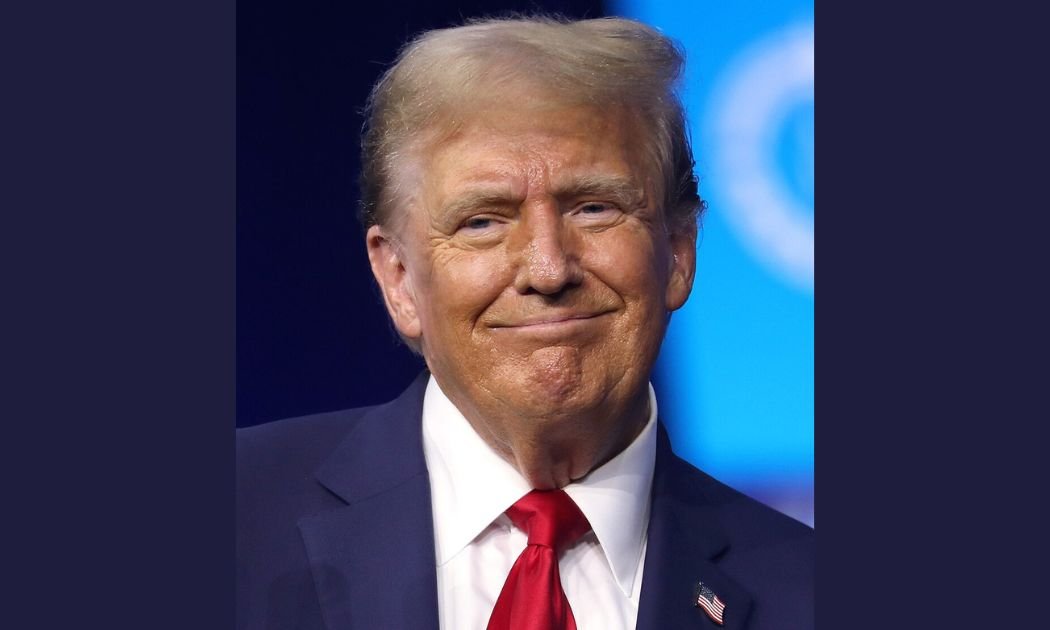
U.S. President Donald Trump has claimed that the Biden administration allocated $21 million through USAID for “voter turnout” in India, now calling it a “kickback scheme” without providing evidence or elaborating on who really benefitted. He suggests that the funds were meant to influence India’s 2024 Lok Sabha elections.

Why Journalists and Media Outlets Are Leaving X (Twitter)
Journalists and media outlets are leaving X, formerly known as Twitter, in large numbers. They cite shifting moderation policies, increased hate speech and concerns about misinformation as primary reasons for their departure.

Fact-Check: Misuse of Rahul Gandhi’s Speech by Ruling Party Members
A video clip of the Leader of Opposition, Rahul Gandhi, circulated widely by Bharatiya Janata Party (BJP) members and supporters, has stirred controversy by suggesting he labelled the entire Hindu community as violent. However, a complete review of the Parliamentary footage by the fact-checking site Alt News reveals the claims are misleading.
Is Accurate Information the Cure for Disinformation?
In a speech, Justice K.V. Viswanathan of the Supreme Court put forth a proposition that a disinformation law similar to that of Singapore might offer a partial solution to the spread of false information in India. Singapore’s law empowers the government to instruct publishers to place correct information alongside false reports, adhering to the notion that the remedy for false speech is more speech. This principle may seem straightforward, but it fails to take into account the intricacies of Indian politics and society.

Is the BJP Now Dividing Sikhs and Muslims?
After attempting to deepen the divide between sections of the Hindu and Muslim communities, as well as between North and South Indians, the BJP is now seeking to create a rift between Sikhs and Muslims through a social media ad. The ad does not mention the party’s accomplishments but instead aims to instil fear about the opposition Congress party with the claim that it is anti-Sikh.

Report: Meta Approves Political Ads Inciting Violence in India
Meta, the owner of Facebook and Instagram, has approved AI-manipulated political adverts spreading disinformation and inciting religious violence during India’s election, according to a report that was exclusively shared with the U.K.’s The Guardian newspaper. The report reveals that Meta allowed inflammatory ads targeting India’s Muslim minority, containing hate speech, disinformation and calls for violence.

Can You Trace Misinformation on Social Media?
According to a study by the Mozilla Foundation and the Finnish company CheckFirst, the ad libraries of major social media platforms—where they keep information about the ads they show—lack transparency. The issue of transparency in ad libraries, involving platforms like Meta, LinkedIn, and X (formerly Twitter), is particularly critical as over 60 countries gear up for elections in 2024, a significant and historic election year.

Compelling Social Media to Better Moderate Hate Speech
A think tank in Sri Lanka has published a study suggesting methods to encourage social media platforms to undertake content moderation more responsibly, thus tackling hate speech and disinformation more effectively. The study offers an alternative to stringent legislative measures, which frequently result in excessive government control over content regulation.

Disinformation is World’s Biggest Immediate Threat
The World Economic Forum’s (WEF) Global Risks Report 2024 identifies the rapid rise and spread of misinformation and disinformation as the most significant global risk over the next two years, shedding light on the nuances of this risk, its implications and the underlying factors that contribute to its proliferation.

New Book Sheds Light on Political Propaganda in India
A new book titled “Love Jihad and Other Fictions,” authored by three journalists, Sreenivasan Jain, Mariyam Alavi and Supriya Sharma, meticulously debunks widely circulated conspiracy theories in India, such as “love jihad,” “population jihad,” and “forced conversions.”
Report Alleges Covert Indian Operation in the US
The Washington Post has reported that a “covert Indian operation,” established in the United States to combat misinformation against India, has been using social media to sway public opinion and target critics of the Indian prime minister.

Everybody Loves a Good Fake News
In the grand “theatre” of politics and media, there’s a secret everyone knows but seldom acknowledges: everybody loves a good piece of fake news, as long as it sings in their choir. The recent episode involving Assam Chief Minister Himanta Biswa Sarma and a creatively edited video of Rajasthan Chief Minister Ashok Gehlot is a perfect illustration of this unspoken truth.

When Governments Establish ‘Ministry of Truth’
The governments of two southern states, Tamil Nadu and Karnataka, are setting up fact-checking units to sift through fake news. At first glance, this might seem like a proactive measure to curb misinformation. But can a government act as a truly neutral judge in these matters?
Disinformation in the Age of Confirmation Bias
While we frequently scrutinise the creators of fake news and deepfake videos, we seldom question why consumers readily accept disinformation without verifying its accuracy. Evidently, the creators recognise that “confirmation bias” has likely reached unprecedented levels in recent years.