
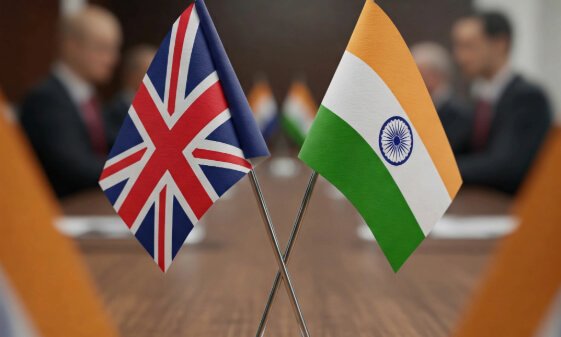
UK to Monitor Religious Freedom in India Under New Foreign Policy Focus
Britain has named India among 10 countries it will closely monitor for violations of religious freedom as part of a new foreign policy strategy. The move links the United Kingdom’s international relations more directly with the defence of freedom of religion or belief.

G7 Leaders Condemn and Raise Alarm Over Rising ‘Transnational Repression’
At the conclusion of the G7 summit in Canada on June 17, leaders of the seven countries issued a statement condemning transnational repression (TNR). Here’s a look at what TNR means, and whether it also hints at India.

The Trolling of Foreign Secretary Vikram Misri Shows What Hate Does
Hate distorts what we expect from our governments. It teaches us to demand emotion over reason, revenge over restraint and spectacle over seriousness. It normalises irrationality. And when governments allow or tacitly support this hate to spread unchecked, it doesn’t remain focused on the supposed enemy—it turns inward, undermining public servants, weakening institutions, and sabotaging the very public interest it claims to defend. The online targeting of Foreign Secretary Vikram Misri is a clear example.

Trump’s Kashmir Offer Shows the US Still Doesn’t Get India-Pakistan
By any diplomatic yardstick, U.S. President Donald Trump’s offer to mediate between India and Pakistan over Kashmir is misplaced. It rests on one of Washington’s most enduring and dangerous misconceptions—that Kashmir is the core problem between the two countries, a notion his predecessor Barack Obama also held.
India-Pakistan Conflict: Fresh Firing Follows Night of Heavy Cross-Border Attacks
From the early hours of May 8 to the morning of May 9, a sharp escalation unfolded along the India-Pakistan border, particularly around the Line of Control (LoC) in Jammu and Kashmir. The 24-hour period was marked by intense military activity, with Pakistani troops reportedly resuming fire early on May 9, amid mutual accusations and growing international concern over the threat of a full-scale conflict.

Is an India–Pakistan War Likely?
The April 22 terror attack in Pahalgam, Kashmir, which killed 26 civilians, has pushed India and Pakistan into one of their most dangerous standoffs in recent years. Daily gunfire is being reported across the Line of Control (LoC), diplomatic ties have been cut off and military activity is intensifying. Though there has been no formal declaration of war, the present situation carries all the signs of a serious military escalation between two nuclear-armed neighbours.
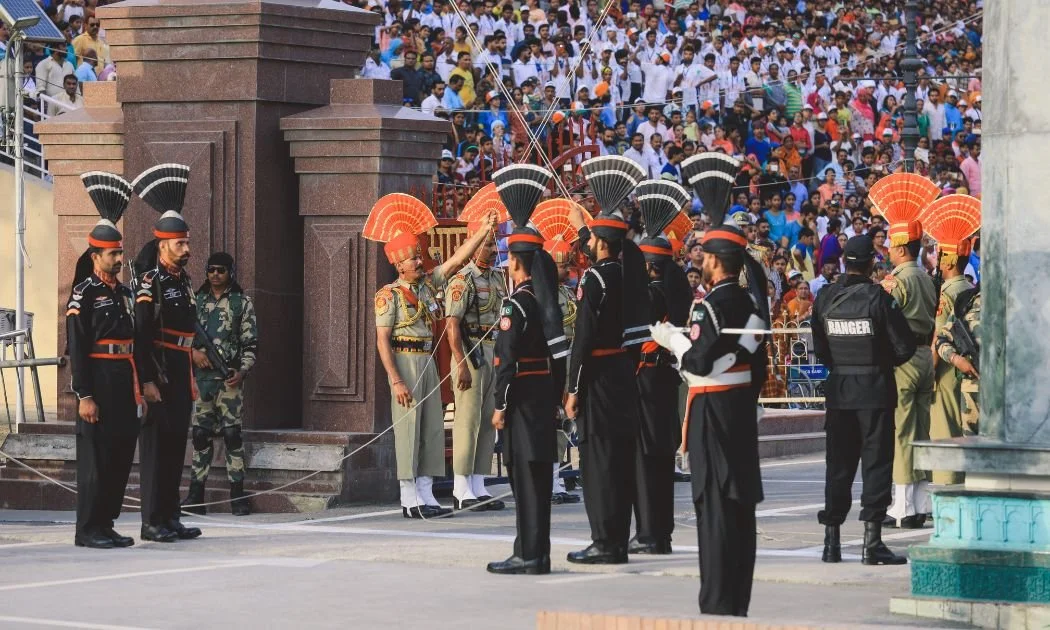
UN Urges ‘Maximum Restraint’ amid India-Pakistan Tension after Kashmir Attack
Amid tensions between India and Pakistan over the April 22 terror attack near Pahalgam in Jammu and Kashmir, United Nations Secretary-General António Guterres, speaking through his spokesman Stéphane Dujarric, has “appealed to both governments to exercise maximum restraint” and asked them to keep the situation from sliding any further.

US Panel Cites Rising Attacks on Muslims, Christians in India
The 2025 annual report by the United States Commission on International Religious Freedom (USCIRF) accuses India of a sharp decline in religious freedom, particularly for minorities such as Muslims, Christians and Sikhs. In response, India has vehemently rejected these claims, labelling them as biased and politically motivated assessments.
‘$21 Million USAID Fund to India’: What’s the Controversy About?
U.S. President Donald Trump has claimed that the Biden administration allocated $21 million through USAID for “voter turnout” in India, now calling it a “kickback scheme” without providing evidence or elaborating on who really benefitted. He suggests that the funds were meant to influence India’s 2024 Lok Sabha elections.
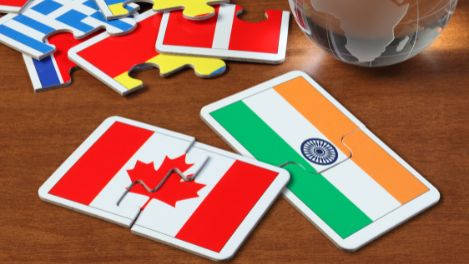
India-Canada’s Apparent Showdown Over Sikh Separatist’s Assassination
India and Canada have plunged into a deep diplomatic crisis, each expelling the other’s diplomats amid escalating tensions over the alleged assassination of a Sikh separatist leader Hardeep Singh Nijjar on Canadian soil last year.
Does the U.S. Have the Right to Comment on India’s Religious Freedom?
A report on India by the U.S. Commission on International Religious Freedom (USCIRF) indicates a decline in religious freedom, particularly during and following the 2024 Lok Sabha elections. The Indian government has rejected the report, labelling USCIRF as biased and politically motivated, though without addressing the specifics of its content.
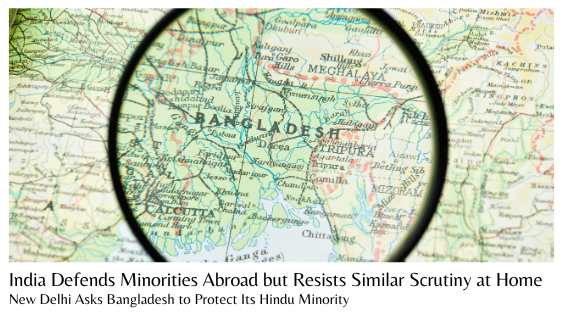
India Defends Minorities Abroad but Resists Similar Scrutiny at Home
Amid a wave of violent attacks on minority communities in Bangladesh, the Indian government has firmly urged the interim government there to protect its Hindu minority. Although this is a commendable stance, it reveals a clear contradiction in New Delhi’s foreign policy. While India has consistently rejected external critiques of its minority protections, it is now using similar diplomatic language to voice concerns in a neighbouring country.

Aussie Media Claims India’s Covert Activities Risk Australia’s National Security
Australian national public media has joined Canada and the United States in expressing serious concerns over India’s alleged covert operations on foreign soil, which they claim threaten their national security. Australian Broadcasting Corporation (ABC) has accused India of espionage and undermining political integrity in Australia.

How Does the World View India?
Global perceptions of India under the leadership of Prime Minister Narendra Modi and the Bharatiya Janata Party (BJP) are starkly different from the triumphant narrative promoted by Indian officials and media, according to a new comprehensive study. Synthesising recent research and polling from international organisations like Pew, Carnegie, GlobeScan and YouGov, the study unveils a critical view of India’s democratic and human rights record, which is influencing its international reputation negatively.

More Details on Alleged Assassination Plot on US Soil Released
The Washington Post has identified an officer from India’s external intelligence agency RAW (Research and Analysis Wing), Vikram Yadav, as a key figure in the alleged plot to assassinate Sikh separatist leader Gurpatwant Singh Pannun on U.S. soil. The revelation comes amid heightened demands from Washington for accountability and clarity from the Indian government regarding the investigation.

United Nations ‘Hopes’ India’s General Election is ‘Free and Fair’
The United Nations has expressed hope for the protection of political and civil rights in India’s forthcoming national elections, emphasising the importance of a free and fair voting atmosphere. The statement comes in the context of recent political developments, including the arrest of Delhi Chief Minister Arvind Kejriwal and the freezing of the opposition Congress Party’s bank accounts.

Arvind Kejriwal’s Trial Should Be Fair and Impartial, Says German Govt
Delhi Chief Minister Arvind Kejriwal, recently arrested by the Enforcement Directorate (ED) in connection with a money laundering case tied to an alleged liquor policy scam, has contested his arrest in the Delhi High Court. Meanwhile, the German government commented on the situation, which led a formal protest from India.

United States Withholds Drone Delivery to India
The United States government has reportedly delayed the delivery of 31 MQ-9A Sea Guardian and Sky Guardian drones to India, linking it to the requirement for a comprehensive investigation into the alleged conspiracy to assassinate Gurpatwant Singh Pannun, a New York-based Khalistan activist with dual U.S. and Canadian citizenship.

European Parliament Raises Concerns Over Violence and Divisive Policies in India
The European Parliament has adopted a resolution, expressing deep concerns over “acts of violence, increasing nationalistic rhetoric, and divisive policies” in India, months before the 2024 Lok Sabha elections.

Is Lakshadweep Happy with Its Rising Profile?
India’s strategic push to transform Lakshadweep into a major tourist destination, in response to the Maldives’ political posturing and derogatory comments against Indian leadership, has ignited a complex debate. This initiative, while showcasing India’s regional assertiveness, raises concerns about the local community’s cultural identity and environmental sustainability.