
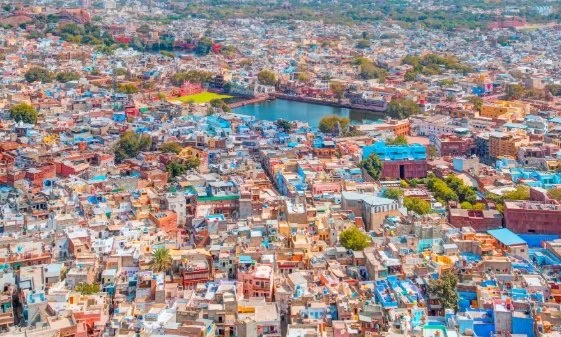
Population Does Not Cause Poverty, Bad Economics Does
The idea that India’s large population is the reason for its poverty is still taught in economics classes, but it falls apart under basic scrutiny, says Sauvik Chakraverti, a libertarian thinker and economist, in “Free Your Mind: A Beginner’s Guide to Political Economy.” If wealth is created by humans working, producing and exchanging with each other, how can more humans cause poverty?
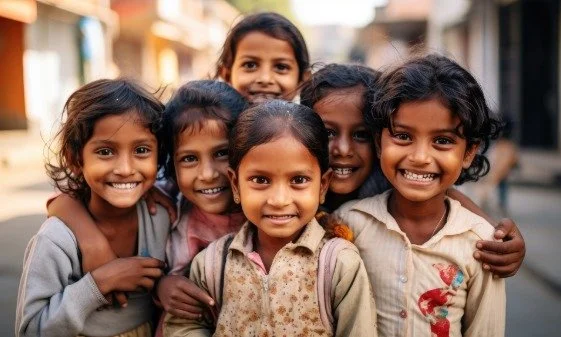
Educate Girls Becomes First Indian NGO to Win Magsaysay Award
“Educate Girls” has become the first Indian non-profit to win the Ramon Magsaysay Award, often called Asia’s Nobel Prize. The group was honored for helping girls from remote villages across India get back into classrooms and stay there. It aims to reach 10 million learners across India by 2035.

Another Crime Against Woman, Missing from India’s ‘Development’ Story
Two brothers in Odisha’s Jagatsinghpur district raped a 15-year-old girl, and when she became pregnant, they tried to bury her alive – the latest of several cases of crimes against girls and women that have come to light in recent months from this state. It appears that, as in other parts of the country, these are men’s reactions to girls asserting control over their own bodies, revealing that India’s claimed growth story must include a different dimension of development.

Why Governments Need to Rethink Development and Its Costs
Nations and communities have long grappled with a difficult question: should nature be damaged to build roads, cities and industries, or does real development mean protecting the natural systems we rely on to live? In the case of the Kazhuveli wetlands, authorities in Tamil Nadu chose the former. But a wetland researcher argues that sometimes, preserving – or even reversing –development, what she calls “de-development,” may better serve both people and the environment.

Great Nicobar Project Risks Shompen Genocide, Rights Group Warns
The central government has approved a 720 billion (72,000 crore) rupees plan to cut away roughly a third of Great Nicobar Island for a deep-water transshipment port, an international airport, a township and a power plant. Civil society groups and scientists say the scheme will strip forests, choke rivers, ruin nesting beaches and expose the Shompen – one of the world’s most isolated tribes – to disease and displacement that could wipe out their culture.
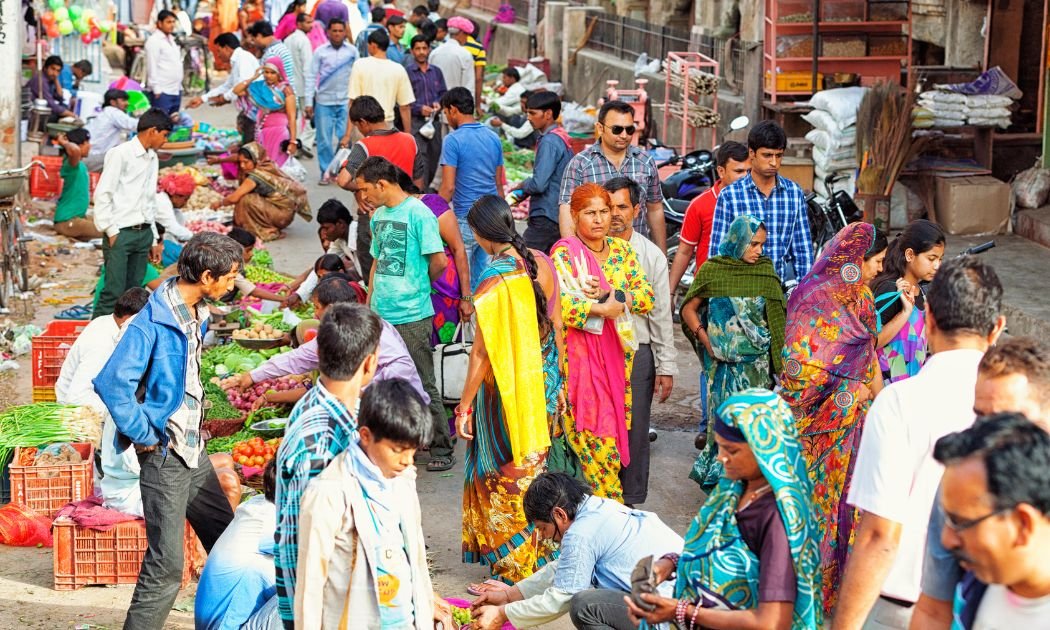
India Must Strengthen Job Creation, Raghuram Rajan Says
At the World Economic Forum Annual Meeting 2025, former Reserve Bank of India (RBI) Governor Raghuram Rajan said while the Indian government is investing in infrastructure, it needs to put more resources into developing human capital through better education and healthcare.

What’s in the World Economic Forum 2025 for India?
The World Economic Forum’s (WEF) 2025 meeting in Davos, Switzerland, which starts on Jan. 20, is attended by several Indian officials, including Union and state ministers and three chief ministers. However, its coverage within India primarily focuses on the country’s economic interests, overshadowing the theme of this year’s meeting. This theme – Collaboration for the Intelligent Age – is crucial for both India and Asia at large, as well as for the people living on this continent.

Is Central Govt Shifting Development Responsibility to States and Private Sector?
The central government’s infrastructure spending, or capex, will remain at 3.4 percent of GDP, Economic Affairs Secretary Ajay Seth said in an interview with ThePrint. This decision, outlined during the announcement of the Union Budget 2024, signals a significant shift in strategy. Seth said it’s now up to state governments and the private sector to step up their investments in infrastructure. Is this move good for the country’s growth and beneficial for its people?

Why Is Southern India More Progressive?
India exhibits a stark dichotomy between the north and south, especially in ideological leanings, which further influences their developmental pathways and societal attitudes. The ideological divide is particularly evident in the contrasting receptions to the Hindu nationalist agenda of the Bharatiya Janata Party (BJP), writes a columnist from Bloomberg.

Indian Economy’s Shift from Agriculture to Services
India, traditionally an agrarian nation, has seen a significant shift in its economic structure. While agriculture once employed the majority of the workforce and contributed substantially to the Gross Value Added (GVA, or the value of goods and services produced), its economic significance has diminished over time, according to a data report, which shows that, in contrast, the services sector has expanded significantly. This shift has both positive and negative implications for the country and its people.

0.001% of India’s Population To Be Ultra Rich in 5 Years
A new report indicates a significant shift in India’s wealth distribution, with a forecast showing an unprecedented increase in the number of ultra-rich individuals over the next five years. This shift, when examined through a lens that scrutinises societal and economic dynamics, reveals a deeper narrative about disparity and the allocation of resources.

New Study Points to India’s Jobless Economic Growth
A new study, looking at how jobs and the economy have grown in India from 1983 to 2021, shows that even though the economy has been growing, this hasn’t led to enough new jobs for everyone. This means that the recent growth in India’s economy hasn’t created the kind of work that a lot of people can do, leaving many without jobs despite the economy getting bigger.

A Reality Check for India’s Economic Growth Projections
Predictions for India’s economic growth in 2023-24 are optimistic. The Reserve Bank of India and the International Monetary Fund project growth rates of 6.5% and 6.3%, respectively. On paper, these numbers paint a picture of a nation swiftly rebounding from the pandemic’s blows. But is this the whole story?

41 Workers Trapped in Uttarakhand Tunnel Rescued
At last, after an intense 16-day struggle, 41 workers were saved from the Silkyara Bend-Barkot Tunnel in Uttarakhand, owing to the efforts of rat-hole miners armed with simple tools. This rescue, though a relief, serves as another crucial reminder for India’s path of development: the pursuit of progress must not undermine the health of our environment and the well-being of local communities.

Why Haryana’s Booming Industry Fails to Create Sufficient Jobs
The Punjab and Haryana High Court has quashed a Haryana state law that required 75 percent of private sector jobs to be reserved for local candidates. It casts a spotlight on the state’s paradoxical situation. Renowned for its vigorous industrial expansion, Haryana has, however, neglected to develop a correspondingly strong educational system for its residents. As a result, while industries have flourished, local employment opportunities have remained scarce.

An Alarming Rise of Illegal Indian Migration to the US and UK
In a striking revelation, the most recent data from the U.S. Customs and Border Protection unveils a stark reality: a staggering 96,917 Indians were detained between October 2022 and September 2023 for illegally entering the United States. This five-fold surge in numbers from previous years challenges the narrative of India’s progress and raises profound questions about the reasons driving such a mass exodus.