By Vishal Arora
24 November 2026
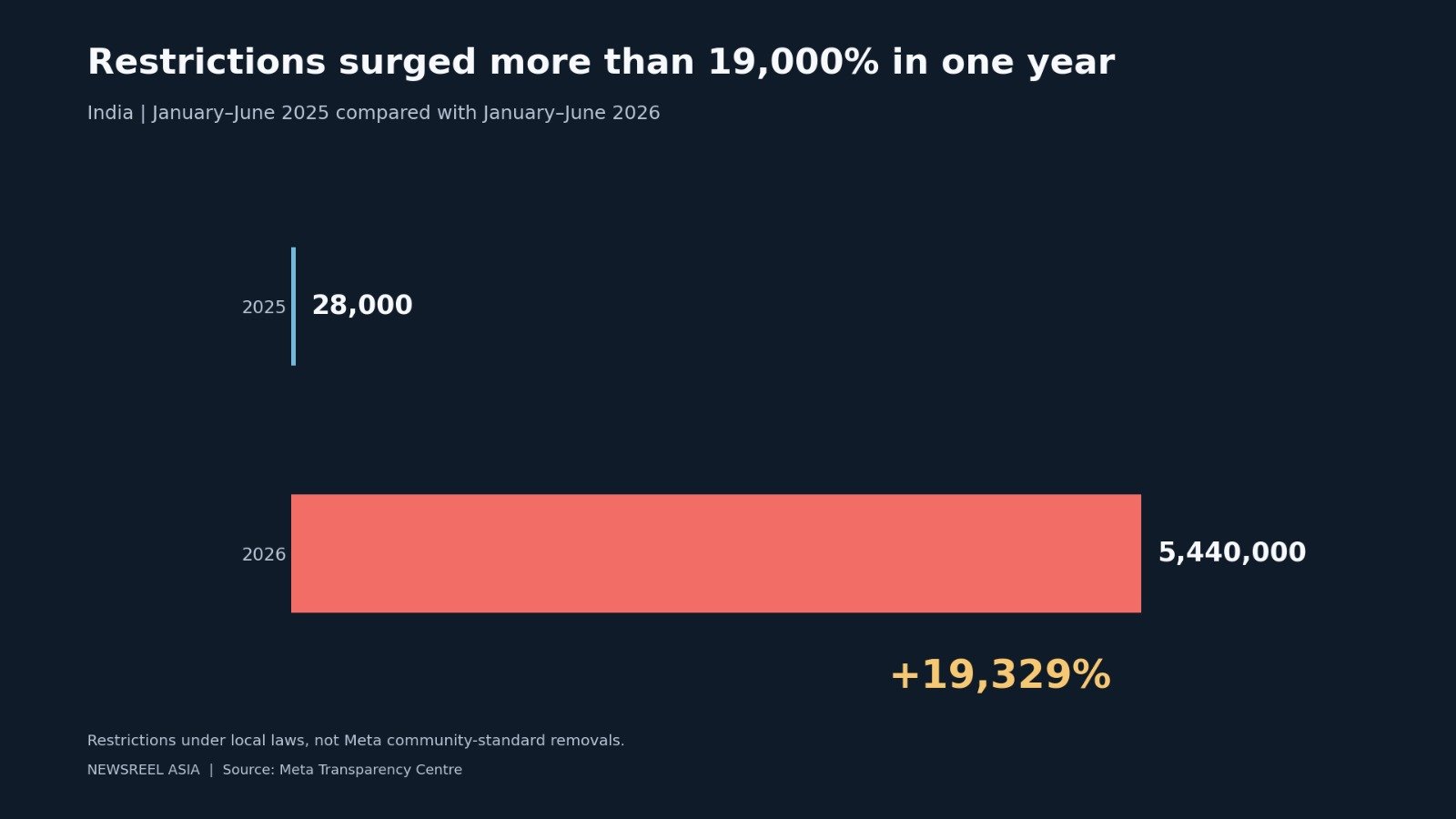
Meta restricted access to 5.44 million items of content in India in the first six months of 2026, the second-highest figure globally, compared with just 28,000 during the same period in 2025. An analysis by Newsreel Asia points to the government’s growing power to restrict online speech, the indiscriminate use of automated censorship and inadequate legal safeguards for journalists and citizens.
Content restrictions imposed by Meta in the country increased by more than 19,000 percent in just one year, according to of Meta’s transparency data. The increase comes amid growing evidence of government intervention in online content moderation, including cases in which journalists reporting on protests and Supreme Court proceedings have had their posts or entire accounts blocked.
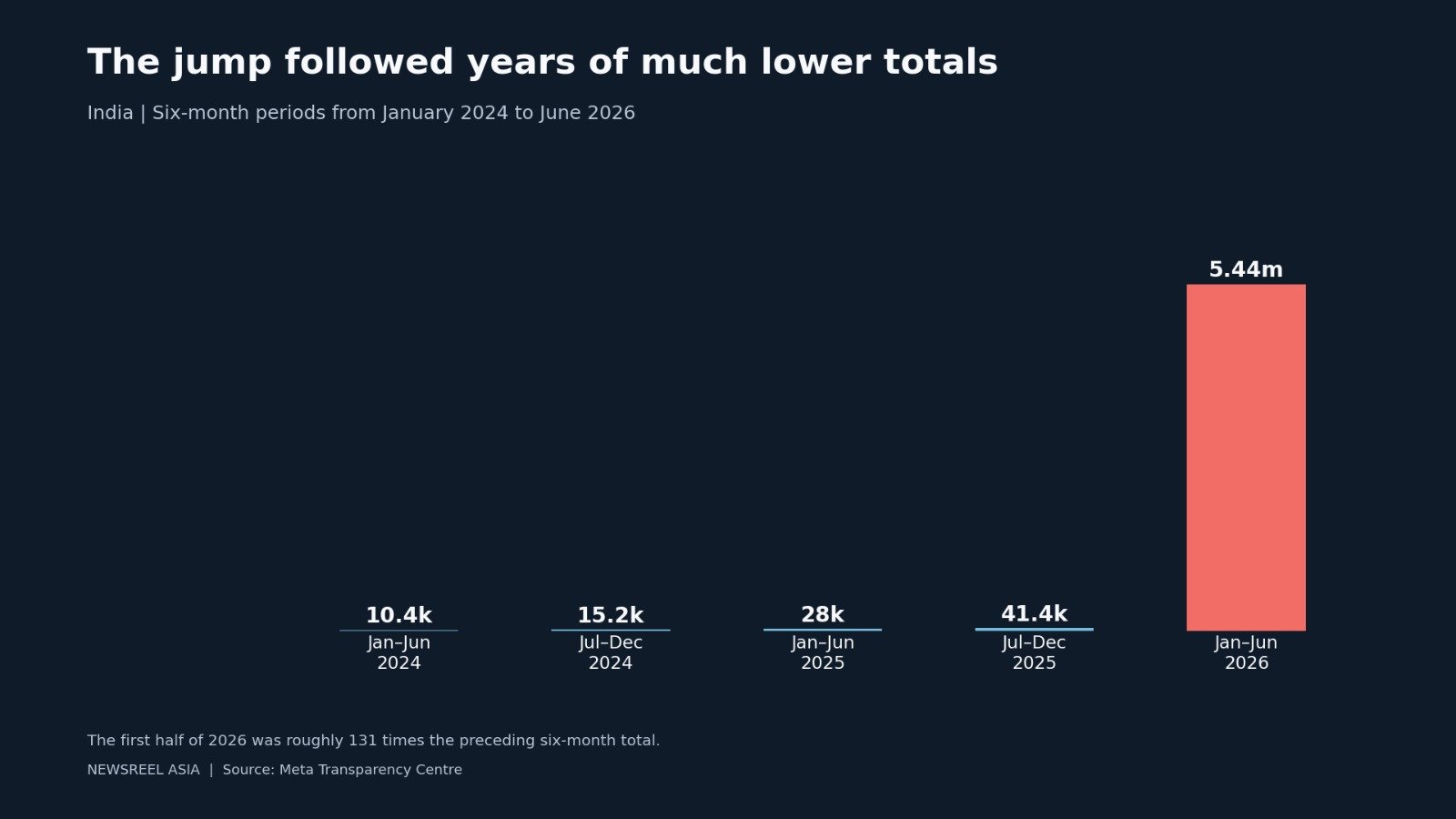
Meta restricted 10,400 items in the first half of 2024 in India, 15,200 in the second half, 28,000 in the first half of 2025 and 41,400 in the second half. The figure then jumped to 5.44 million in the first six months of 2026, roughly 131 times the previous six-month total. Indeed, the number of restrictions during those six months exceeded the combined total reported for India during the preceding 12 years.
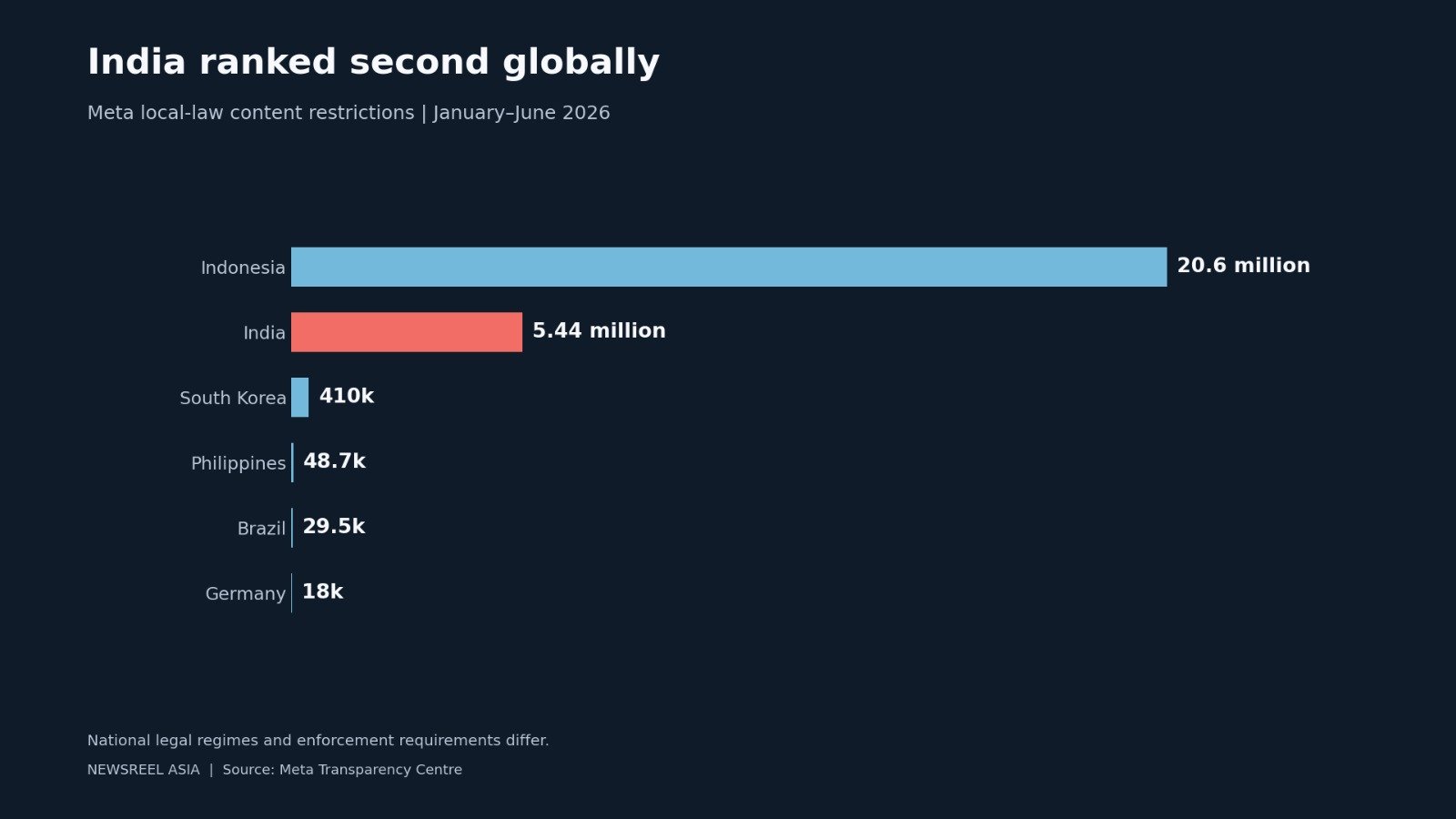
Globally, Indonesia topped the list with 20.6 million, followed by India with 5.44 million. South Korea recorded 410,000, the Philippines 48,700, Brazil 29,500 and Germany 18,000. These figures concern content restricted under local laws, rather than posts removed for violating Meta’s own community standards. Such restrictions generally prevent users in a particular country from accessing material that may remain available elsewhere.
Meta says it was required to proactively restrict content at scale under India’s amended Information Technology Rules. The company identifies alleged unlawful material concerning online gaming, artificially generated depictions of prominent figures, threats to India’s sovereignty and integrity, gender-based harassment and promotion of enmity between groups. It also identifies reports from the Ministry of Electronics and Information Technology, the Ministry of Information and Broadcasting, the Indian Cybercrime Coordination Centre (I4C) and state law-enforcement agencies.
This means that a legal restriction affecting one item can result in numerous identical copies being blocked through automated enforcement. Such a mechanism may help prevent unlawful material from repeatedly circulating. But it also creates the possibility that an excessive or legally defective restriction will be reproduced on a large scale, without a separate examination of every affected item. Meta has not disclosed how many original notices produced the 5.44 million restrictions, how many involved political expression or how many were subsequently reversed.
The number of content restrictions is likely to be considerably higher in the second half of 2026, as the protests initiated by the Cockroach Janta Party (CJP) in June intensified and continued across the country. During the second wave of protests in October, the government issued two advisories documented by the Internet Freedom Foundation (IFF).
On October 8, the Ministry of Electronics and Information Technology instructed social media platforms to prioritise complaints from authorised government agencies and prevent the dissemination of unlawful information. Two days later, the ministry issued another advisory specifically to Meta, calling for closer scrutiny of social media posts about ongoing protests, particularly reports concerning police actions and restrictions imposed by the authorities.
The second advisory also addressed Meta’s recommendation systems, seeking rapid identification and review of content gaining public attention and measures against disproportionate exposure for a limited set of narratives. According to IFF, the ministry had not publicly released these advisories.
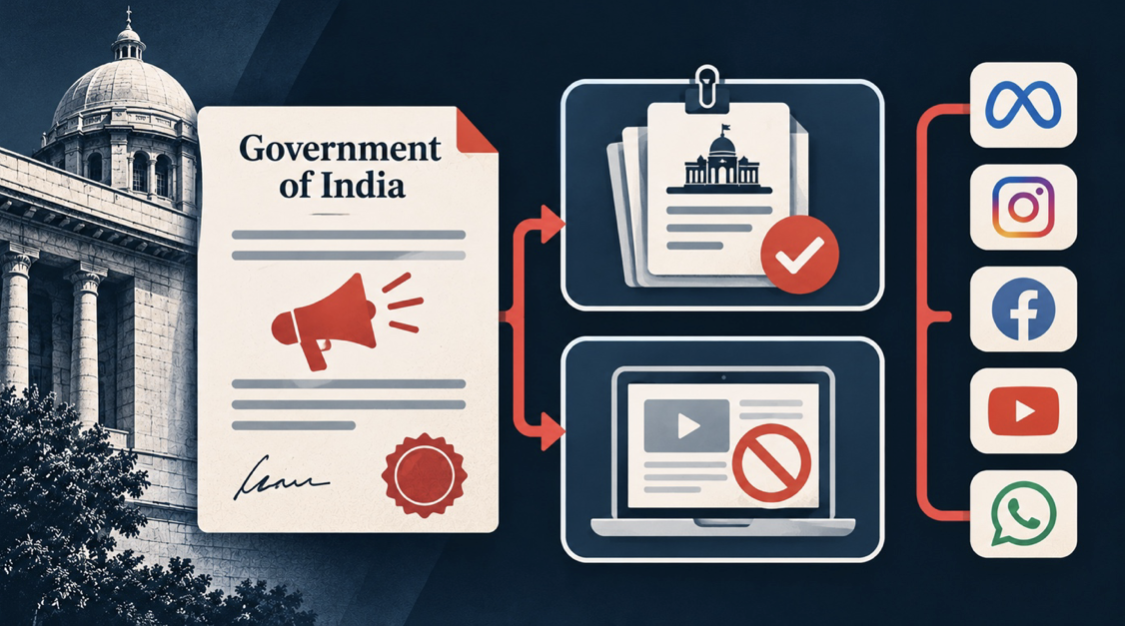
The advisories’ timing and content raise serious questions because the government was seeking intervention in the circulation of information precisely as citizens were protesting and journalists were reporting on the police response. IFF argues that government advisories cannot substitute for the legal procedures required to restrict constitutionally protected speech.
The consequences of such restrictions are particularly serious for journalists reporting on protests, police actions and other matters of public interest. Investigations by the Internet Freedom Foundation (IFF) have documented cases in which journalists' posts and entire social media accounts were restricted, often without adequate explanations or access to the government orders behind those decisions. This makes it difficult for journalists to challenge censorship and can prevent the public from accessing their other reports as well.
The government’s use of Section 79(3)(b) of the IT Act, including notices sent through the I4C-operated Sahyog portal, deserves particular attention. Under this provision, social media platforms risk losing legal protection if they fail to act against unlawful content brought to their attention by authorised government agencies. IFF argues that the government is using this provision to get content blocked without following the legal safeguards required under Section 69A, which specifically governs online content blocking. This gives the government considerable power to pressure platforms into restricting speech, as companies risk losing legal protection if they refuse to comply.
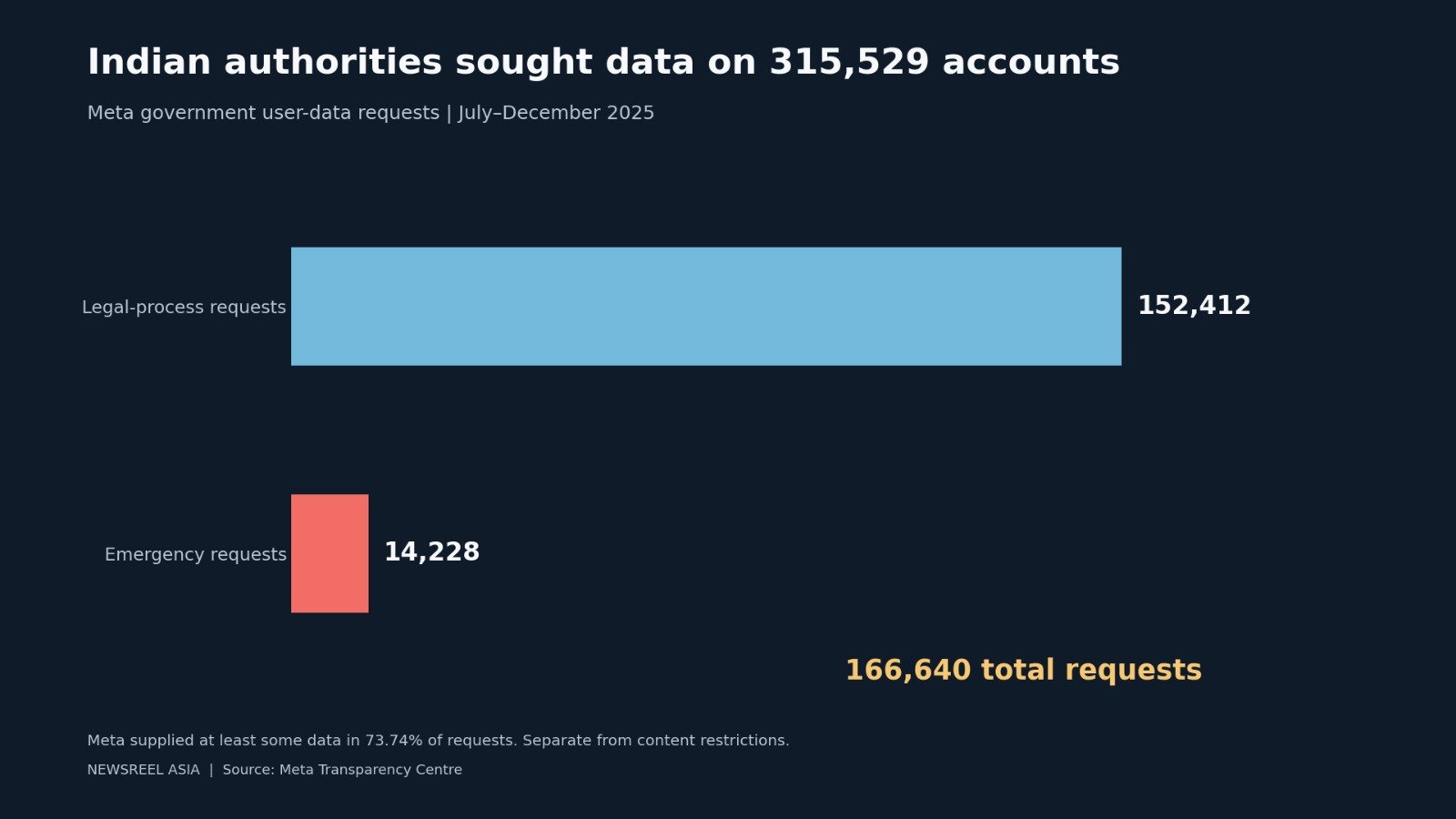
Alongside these developments, Meta’s transparency data reveals a substantial increase in government requests for information about users. Between July and December 2025, Indian authorities submitted 166,640 requests covering 315,529 users or accounts. Meta provided at least some information in 73.74 percent of the requests. Of the total, 152,412 were classified as legal-process requests and 14,228 as emergency-disclosure requests.
The safeguards available to affected users appear particularly inadequate. IFF found cases in which Meta’s grievance system closed journalists’ complaints within two to four minutes, without substantive examination. It also documented prolonged delays before the Grievance Appellate Committee. Meta’s transparency statement says it generally identifies the requesting government authority in cases involving legal restrictions, but India is among the countries excluded from that disclosure practice, primarily because of legal and regulatory considerations.
Article 19 of India's Constitution protects freedom of speech, subject to reasonable restrictions permitted under Article 19(2). The government can act against unlawful content, but that authority does not give it unlimited discretion over political criticism or journalistic reporting.
It appear that the legal and technological machinery for restricting speech has expanded faster than the safeguards intended to prevent its misuse.