

SHEFALI KHAN
Producer
My journey began at Jamia, where I earned a degree in Mass Communication that unexpectedly became a masterclass in filmmaking, journalism and politics.
I've come to realise that my true passion lies in crafting narratives that amplify the voices of the marginalised. As a storyteller, I've always been drawn to the complexities of the human experiences. I believe that storytelling has the power to challenge our assumptions. Through my work, I aim to create stories that not only inform but also educate and motivate.
Newsreel Asia's commitment to showcasing diverse perspectives and promoting social justice resonates deeply with me. Here at Newsreel Asia, I'm excited to contribute my skills and experience to the mission of amplifying underrepresented voices.
I can be contacted at shefali@newsreel.asia
Video Features by Shefali khan

Despite Warnings by environment experts, development projects like dams are turning out to be deadly. Destroying mountains, flooded rivers, The flash floods, cloudburst are not just natural, they are man made disasters. Newsreel Asia’s producer Surabhi Singh travelled to Northeastern state of Sikkim to explore how a dam aggravated the flash floods of October 2023.

Narsisus was addicted for 27 years and survived multiple suicide attempts. Today, he runs a modest community rehab centre. With no frills, only a few beds, basic meals and peer support, it offers a fragile but vital lifeline for those who walk through its doors. His journey, from the darkest moments to helping others avoid the same brink, unfolds in a state battling one of India’s deadliest mental health crises: Sikkim.

Neeta Oraon lives in Nazira, a small town in Assam’s Sibsagar district. At 27, she has already spent more than a decade working in a tea garden. Her dream of becoming a nurse gave way early to the demands of poverty, debt, and family survival. She now works long hours under the sun, earning 250 rupees a day while caring for her ailing mother. Like Neeta, thousands of women in Assam’s tea gardens remain trapped in cycles of generational hardship and unseen labour.

In Assam’s Morigaon district, Jamal Uddin, a madrasa teacher from Borbori, still carries the trauma of the 1983 Nellie massacre over alleged illegal immigrants. He lost his mother, brother and sister, who were among an estimated 2,000 to 3,000 people, mostly Bengali-speaking Muslims, who were killed in a matter of hours. The issue of illegal immigration from Bangladesh remains deeply contentious in the state’s politics and society. Successive governments have carried out actions in the name of anti-terror measures, targeting the minority Muslim community and fuelling widespread suspicion against it.

West Bengal has grappled with a deep-rooted corruption crisis for decades—today, at the heart of it lies the School Service Commission (SSC) teachers’ recruitment scam, which has shattered the hopes of thousands of deserving candidates. In this investigative video, we uncover how teaching jobs were allegedly sold for lakhs of rupees, replacing merit with money in one of the state’s most crucial sectors — education.

After India’s Partition in 1947, Abha arrived with her mother and four daughters—seeking safety, but facing years of uncertainty. Binu and Lilly Roy, who lost their father in childhood and have no memory of their homeland, and Geeta, who was just one year old when she came to India and lost her mother a few years later, all ended up in Cooper’s Camp in West Bengal’s Nadia district. They are among the countless refugees from East Bengal, now Bangladesh, who fled their homes during Partition.
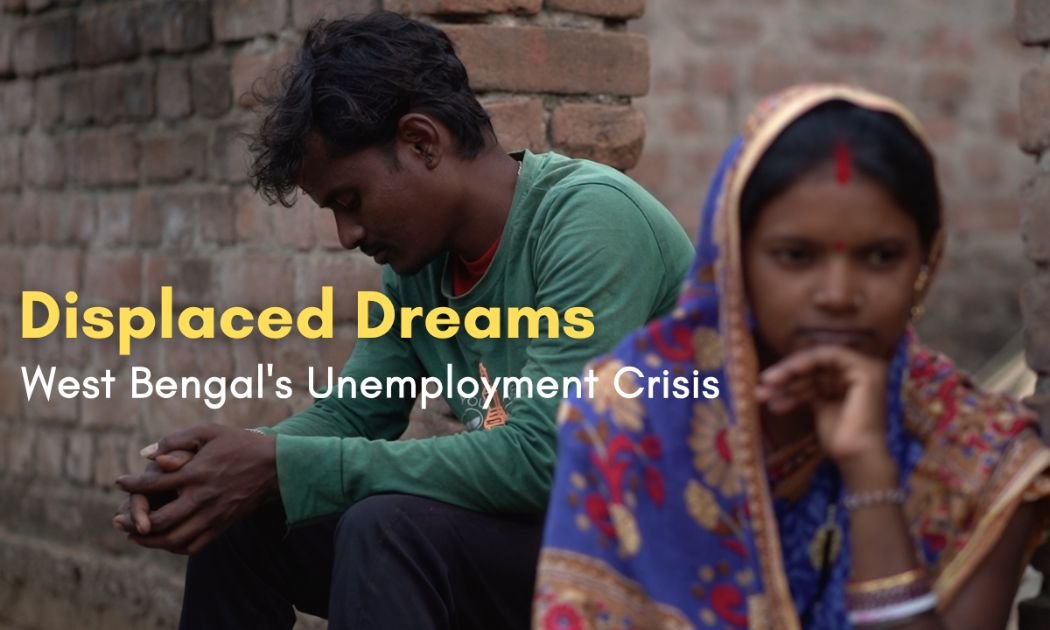
Amal, 27, is a migrant worker from West Bengal’s Purulia district who was forced to leave his village due to a lack of local job opportunities. The recent halt in funding for schemes like MGNREGA in this state has worsened his struggles, pushing him to migrate to different states in search of work. Leaving behind his wife and ailing mother, Amal’s story reflects the harsh realities faced by rural workers dealing with unemployment, migration and the collapse of social safety nets.

Amid the political frenzy leading up to the 2025 Delhi assembly elections, scheduled for Feb. 5 with results on the 8th, all contesting parties—from the Aam Aadmi Party (AAP) to the Bharatiya Janata Party (BJP) and Congress—are actively courting women voters.
Sikkim, despite being rich in rivers, is facing a severe water crisis. In South Sikkim, where rainfall has dropped sharply, villagers like Durga have stepped in to fill the gaps left by failing systems. Once a farmer, he now works as an unpaid “barefoot engineer,” keeping water flowing when infrastructure cannot. This is the untold story of survival in the hills.